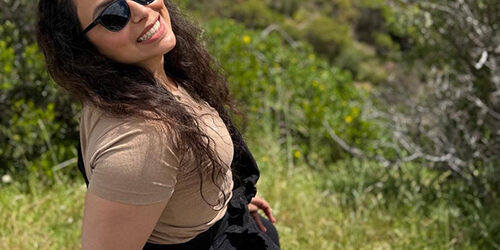
Long before the diagnosis, my family had reached firm consensus on one thing: I was clumsy. I bumped into furniture, tripped on stairs and misjudged distances. It was the family’s most reliable running joke and, as with most family running jokes, everyone was completely wrong. I was not clumsy. I just could not see. But nobody thought to check, because ‘clumsy’ is a much easier diagnosis than ‘hereditary genetic bingo’.
THE ADAPTATIONS CAME FIRST
For about two and a half years, my vision quietly declined. I noticed the adaptations before I noticed the loss: larger fonts, High Contrast Mode, sitting closer in lectures, zooming in on shared screens and avoiding printed pages. Crossing roads became difficult; driving was out of the question. I blamed screen fatigue, age and general exhaustion − the professional equivalent of blaming the tea for the taste of the mug.
THE DIAGNOSIS, AND WHAT IT TURNED OUT TO MEAN
It began with headaches, then daily migraines. The optometrist sent me to an ophthalmologist, who diagnosed a hereditary condition affecting my photoreceptors, hereditary ‘clouds’ in my eyes, and cataracts in both eyes. The first specialist told me to come back after 40 for surgery. What I could not explain then was that I had never seen well. The ‘clumsy’ label had stuck so completely that no one thought to look further.
THE BREAKING POINT
By September 2025, I had lost depth perception entirely. I could not tell how far away a car was, where the pavement ended, or which step was real and which was shadow. What frightened me most was not losing sight itself; it was losing independence. How would I take care of myself, manage, or support myself? This time, the familiar 3 am questions carried a different weight.
I called the ophthalmologist’s rooms for a second opinion. The receptionist said they were booked until June 2026. I told myself the universe had its reasons. It did − but it also had a receptionist with poor triage judgement.
On 25 November 2025, the specialist Whatsapped me. The waiting list was only for new patients. Could I come in at 8 am? I said yes, then remembered I had a flight to Johannesburg for a 17 km BDO team-building hike at Castle George. The next morning, I told her I could not watch TV, read, drive or walk outside alone. She scheduled the surgeries immediately: first eye on 1 December, second eye on 8 December. Two weeks. Two eyes. Two Mondays.
CASTLE GEORGE
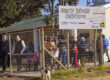
I did the hike anyway. My team had been quietly holding me up for months, summarising documents, letting me memorise slides, and walking me across streets without making it a thing. At Castle George, they gave me a wooden staff so I could feel the ground before stepping. I fell more times than I can count. They slowed down. They picked me up every time.
The staff, the falls and the slower pace prepared me for what surgery would ask of me a week later: to trust, stop bracing and let someone else take the weight.
With no time to process or panic, I flew back to Cape Town after the hike, spent three days with family in Durban, and returned on 30 November frozen with fear. Eyes are one of the most vulnerable places on the body, and I had carried that vulnerability without a name for years. Unnamed things get heavier, not lighter.
DECEMBER 2025
I went into hospital with my best friend, who had brought me a small stuffed swan with a crown. The nurses let me hold her into surgery. The procedure took about 15 minutes. Afterwards, during the follow-up eye test, I flew through the letters for the first time in my life and cried halfway through the chart. I had never cried at a chart before, although my previous relationship with charts had been almost entirely negative.
Then came six weeks of recovery in the windiest city in the country: no cooking, wind, steam or showers. My husband cared for me. Friends sent flowers. The universe sent the right people and, for once, in the correct order.
SEEING AGAIN
Getting used to my own face took time. Everyone I met, I met again: dimples I had never seen, body language I could suddenly read, colour on a jacket, water, trees and light. I cried quietly and often with concentrated gratitude. I started driving again. Reading again, books until 3 am, which I am not sorry about.
WHAT THE BODY WAS DOING THAT I DID NOT NAME
For two and a half years, some part of me had been running silent adjustments: choosing larger fonts, sitting closer, reading less at night and accepting a smaller world without formally accepting it. None of it appeared on a to-do list, in a performance conversation, or in a promotion letter. It was invisible work, the only work that never shows up in the reconciliation.
In our profession, women especially do this constantly. We absorb overload without naming it. We adapt to a new standard, team, care responsibility or health event so smoothly that it looks as if nothing has happened. Only when the circumstance lifts do we realise how much we had been carrying, rather like discovering, retrospectively, that you were doing IFRS 9 with a broken calculator.
THE PROFESSIONAL COST
The cost of not seeing well was not simply missed reading. It was fear. When you cannot see clearly, almost everything becomes a threat. You move from fear, receive people from fear and react from fear. I turned down travel, presented less, spoke more quietly and deferred too easily, quite an oversight for someone who reviews financial statements for a living.
One moment of leadership will stay with me. When I told my boss, Lance September, what was happening in early 2023, I asked for a day to process it. He said: ‘Take the week. This is a journey you will go on. You need to pace yourself.’ Then he asked how BDO could support me, a larger screen, bigger fonts, a brighter cursor. He solved the problem without making me the problem.
THE RECLAMATION
This is not a wellness piece or a resilience piece. Both frames would flatten what happened.
What happened was a reclamation: the return of ordinary things, reading a page, driving at night, seeing the water, that I had, without realising, given away. It was also the return of energy spent silently compensating.
In our profession we are trained to look for materiality:
to notice what has changed and by how much. We are less practised at noticing what has been quietly subtracted from attention, stamina, sight or imagination. The subtraction rarely announces itself. It becomes visible only when something is restored, by which time we have often forgotten the baseline.
SEEING BETTER
In October this year, I turn 40. In October, I also sit for the final exam of my Executive Development Programme, 16 years after beginning articles at PKF Durban in 2010.
It will be the first birthday, and the first exam, that I will read clearly in a long time.
But ‘seeing better’ now means more than eyesight. It means clearer perspective: reading a room, zooming out when things feel heavy, sensing when someone is struggling, and setting stronger boundaries because I can finally see where to place them.
If this is useful to someone reading quietly on a Tuesday night, someone steadily adjusting to a smaller world and not yet naming it, I would want her to know this: you do not have to go through the scary things alone. There are people rooting for you, even when you do not know they are. There is never only one pathway forward. You are never truly cornered. And if it feels like you are, that is usually a sign to look up rather than a fact to accept.
As Maya Angelou said, ‘Have enough courage to trust love one more time and always one more time.’ Have enough courage to look at fear, feel it and name it, but do not get stuck in it.
The most material adjustment any of us will ever make is the one we finally allow ourselves to see.
And the bravest is the one we finally name.
Author
Shehnaaz Suleman is a Partner at BDO South Africa and leads their dedicated IFRS Technical Centre for Financial Services clients − both audit and advisory. She genuinely loves her job (she must, she has been doing it for sixteen years). She is a creative mind with a warm and transparent leadership style and can be spotted enjoying the trees at Green Point Park almost every other weekend − usually not tripping over anything now, thank you for asking.